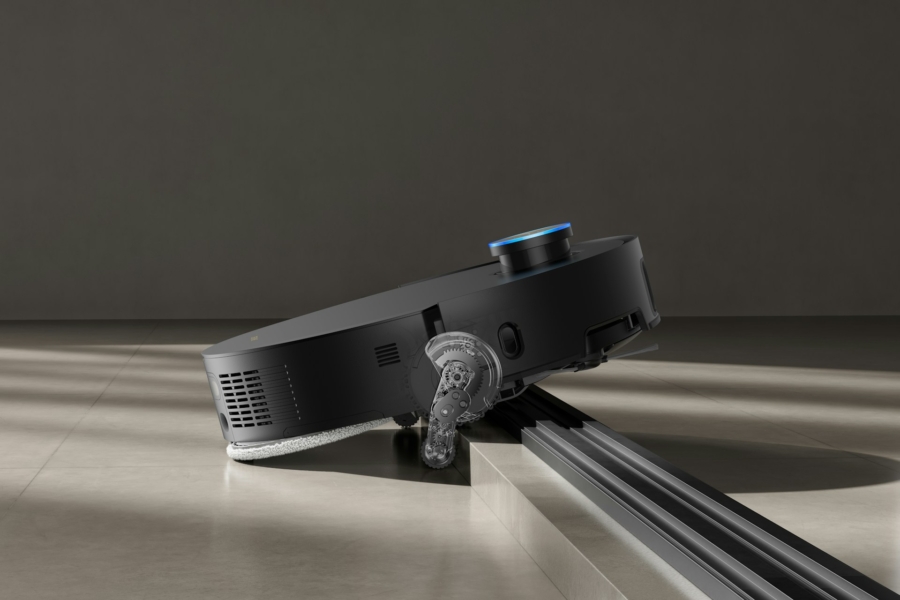
Robot Vacuum Ban Stops All Future Releases
The FCC added foreign-produced advanced robotic devices to its Covered List, and the framing everywhere is “transition” back to the US. Manufacturers can apply for Conditional Approval, which requires an onshoring plan, quarterly progress reports, and a one to five year schedule of committed capital expenditure. None have been granted yet. Models currently on sale are not affected. It’s the new models that need to seek approval.
The exemption from the ban runs through the Federal Acquisition Regulation’s definition of a domestic end product, which requires 65% of component cost sourced in the US, rising to 75% in 2029. Component cost, not component count. You can injection-mold every housing, bumper and dust bin in the US tomorrow and not move the needle, because plastic is the cheap part. The majority of the cost lives in lithium-ion batteries, circuit boards, motors, rare-earth magnets, LiDAR, camera, and other sensor modules. Asia-Pacific makes over 80% of the world’s PCBs and books under half the revenue. The Department of Energy put China at 92% of rare-earth permanent magnets in 2020.
Vacuum Wars, in analyzing the ban, leaned on announced US investment as reason to file some components under the “easy” column. I’d take that with a grain of salt. The infamous Hyundai and LG battery plant in Savannah, Georgia, known for the ICE raid, has a sister plant in Bartow County. That one came online, on time. Money is not the issue for the auto giant. It’s untangling lurking uncertainties in the US market itself. The infrastructure behind the robot vacuum isn’t going to get a fast pass.
So the honest range of outcomes is narrow. Either the domestic supply chain gets built, several years pass with no new models on US shelves, and buyers pay whatever American-sourced hardware costs. Or individuals import from abroad and eat the tariff a unit at a time. Neither of those is a win for consumers. Both of them are the consumer paying for a supply chain decision they had no part in.
The manufacturers, in unison, are claiming to support the existing models even after the ban. It is a promise I would trust the least. These manufacturers won’t maintain outdated lines that won’t be sold or needed anywhere else in the world. Not overnight, though. I’ve had first hand experiences with iRobot in South Korea, twice, no less. When it pulled out of the market, software updates began to become sparse, then the parts, until they hit flash sales to close down online stores completely. Once the new model releases halt, there is no incentive for the brand to maintain the stocks of replacement parts for existing models.
For the life of me, I do not know what the White House is aiming for with the new decision. What I do know: seeing how Korean consumers had reacted to the iPad ban, this regulation is not going to sit well with most Americans either. After all, anyone can take a quick trip to Canada or Mexico and happen to find a good deal.