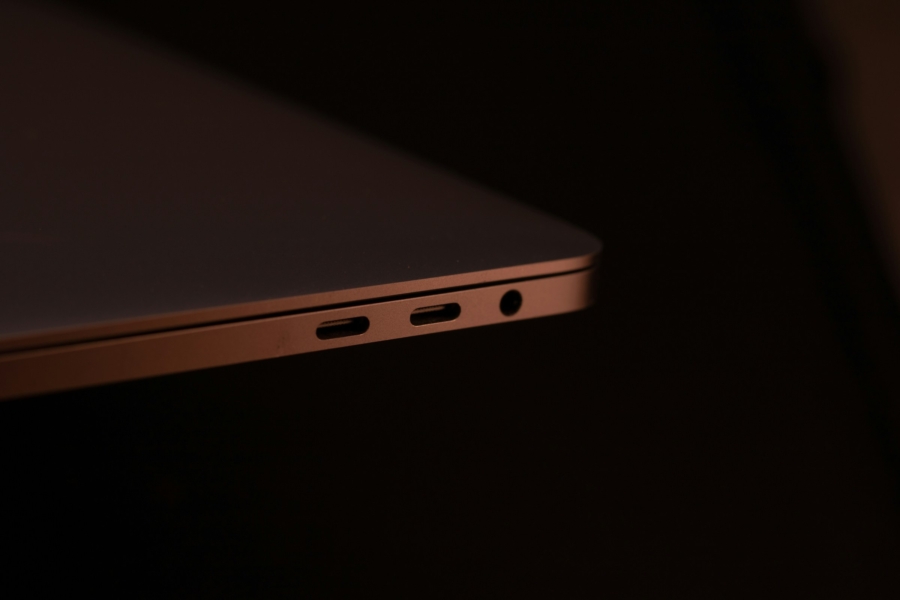
Call for USB-C Micro?
I am somewhat surprised not many reviewers or analysts mention the elephant in the room with the latest trends toward thinner smartphones: the USB-C port. It’s not just iPhone Air and thinner bar type smartphones that suffer from its own design choices. Foldable smartphones that are supposedly the future form factor are also severely impacted how thin the overall phone can be by the port, otherwise it will be too thick when folded.
The specs I could dig up on USB-C ports did not have fixed height definition; I take it so long as the well-defined receptor fits, it is within the allowance. Overall, the ports are roughly 3.1 to 3.5 mm high. For comparison, recently released foldable smartphone, Galaxy Z Fold 7, is measured 4.2 mm when open. iPhone Air, a bar type, is measured at 5.6 mm. The thickness of these phones are quickly approaching the limit of USB-C.
Some may have forgotten how we came to having so many USB standards in the first place. There were, even before the prevalent micro-B, legacy connectors. The ones I’ve used and seen were standard USB-B and mini USB-B. Standard USB-B is still used in some printers, and mini, while quite outdated, was often found in digital cameras from 2000s. Digital devices were getting smaller and slimmer, and thus a hardware spec with 1.8 mm height was created, as Mini, with 3 mm height, was too big. Micro-B had won the jackpot with smartphones.
We are at a point of needing a new USB-C standard, preferably still reversible but thinner. The key issue also at hand is lack of labeling on cables. If we are to buy new sets of cables for a slimmer smartphones, consumers would not want to pay multiple times for faster charging, faster data, and latest features (such as DisplayPort) all over again. I, for one, actually have a label printer and a USB-C cable box just for this purpose. If there is a room for improvement for current USB-C even without the micro version, labeling is certainly the department.