Post-migration, I knew some jobs were left untouched. Not because of the amount of work involved — again, I don’t think the workload has meaningfully increased. For the first project afterward, I wanted to focus on a part of the website I hadn’t touched in a while: analytics.
Tagged WordPress
To Self-Host or Not To Self-Host, Migrating with AI Pt. 4
No doubt the idea of complete control of a blog at $10 a year would be appealing for many. And no doubt many would share the same concerns as I do. During the planning phase, some of the definitive downgrades I was able to come to terms with, some of the regained controls I was able to make use of, and the saved cost I was ready to file under an existing list of subscriptions. I believe there are three major concerns most bloggers may have: uptime, support, and technical debt to AI.
The Part Where I Pay, Migrating with AI Pt. 3
The plan finished baking. Reviewed, revised, the whole nine yards. I wasn’t going to execute the plan myself; I wanted to automate it as well. The only decision left was how.
Between Cost of Hosting and Effort of Self-Hosting, Migrating with AI Pt. 2
Starting a blog doesn’t cost money. At least that’s how I started back in the 2000s, and free platforms are still around. Intermediary platforms came along in the 2010s, giving some control back to bloggers or sharing the ad revenue. The way out of it all, ever since the term weblog was coined, was to run it yourself — either on a machine from a paid hosting service or on your own home server. The question was price and effort.
The Day Hosting Failed Me, Migrating with AI Pt. 1
Mad Tea Party was down for 24+ hrs. A datacenter problem. I’m not arguing a professional hosting service should have zero downtime. Failure itself is expected. Reliability is what happens after it. A full day of downtime is one full business day lost, and a good hosting service should be judged not only on physical performance, but on clear communication during a sudden failure and reasonable effort to reduce it.
App to Identify wp2shell Vulnerability on WordPress
If your WordPress has automatically installed an update, this is the retroactive PSA on why WordPress has urgently issued one. If it hasn’t, consider it an urgent PSA. There is a vulnerability in WordPress Core, disclosed July 17, affecting 6.9.0–6.9.4 and 7.0.0–7.0.1. The attack surface is Core itself: no compromised plugins, themes, or custom code. As far as I could find, with an estimated 500 million+ websites running the platform, WordPress has decided to push the update rather aggressively.
How to Add Custom Text Around WordPress Comments
After the 30 days decision, the first change I wanted to make immediately to the site was letting readers know that comments will be closed after certain period. I didn’t get into details before, WordPress simply doesn’t load comments section if the post in question doesn’t have any comments and the submission is closed. In other words, there is “around the comments” control for the site admin or the site builder. Any actions would need to be hooked to the body of the contents or beginning of the footer.
How to Change Comments Closed Message on WordPress
On WordPress, the default behavior for comments section has an oddly hidden notification message. It is only shown when a post already has some comments, and the comment section must be closed for future submission. It simply reads: “Comments are closed”. It sounds obvious and communicates to the fact why the comment field is not visible, but the site moderator or designer is not given control over the text message itself — which is, again, weird.
AI Spams and Comment Moderation
Many websites have some common unwritten rules on comment moderation — most common of which is locking or closing comments after certain duration. I believe Reddit has it at 6 months, under some of the news articles they have it at 14 days, and some chatting-like discussions, they keep it tight at 48 hours. The Mad Tea Party is now closing comments (Trackbacks and others still work) after 30 days.
App to Disable WordPress Native Functions
There are several native WordPress features that fell out of use naturally, or became loopholes bloggers would want to plug, or became the subject of privacy regulations. WordPress is a strong platform that enables much of the extra toppings that, in my opinion, at the time sounded like interesting social media features.
How to Self-Host Google Fonts on WordPress
If you have noticed outage, I must apologize. I was experimenting with what can be or should be done with Google Fonts. Of many things Google offers for free, Google Fonts is the platform caters to creative purposes without extra charge. Many font creators contribute towards the goal, and some of the fonts, such as Nanum series from Naver, became de facto fonts (for Korean language) for many. And Google is open to let other websites to take advantage of it.
App to Add 2FA on WordPress
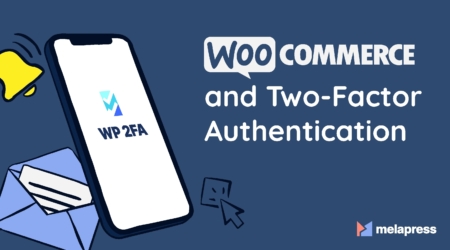
Surprisingly, WordPress supports neither 2FA (two-factor authentication) nor passkeys. Considering the prevalence of both and how readily available they have become, it’s still hard for me to believe WordPress does not have native solutions. Websites, of any kind, due its nature, are bound to be exposed. No wonder why WordPress is being preyed on.
It’s Now on CDN
Putting Mad Tea Party on CDN or any other cache servers have been on the back burner for the longest time. And for the first time since its inception, and frankly thanks to free tier services available, Mad Tea Party is now using CDN. It won’t drastically change the experience for the readers; perhaps some European traffic may be able to see the benefit. Other than that, I just wanted to see how free tier CDN operates.
How to Replace WP-Cron with Linux Cron pt. 2
It’s been about 4 months since I wrote about wp-cron madness. To reiterate why wp-cron had to be called manually, that’s due to how some of the cron jobs weren’t executed even though it was queued for prolonged time. I’ve tried three different methods, one of which was to tackle only the cache. As of writing this, I’m settled with wget method.
How to Replace CSS import with link on WordPress
When I started tweaking the theme for WordPress, I started with css, especially the fonts. I wanted the fonts that mimic paper-like experience as much as possible, and although the goal post has shifted quite a lot since, the way I had done fonts on css were almost always the same.