Tagged NAS

The Murky Rabbit Hole of DIY NAS

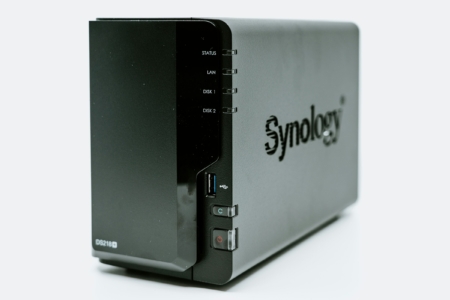
My NAS is reaching the end of its design. Twenty terabytes usable across five bays, a few hundred gigabytes left, and it’s warned me twice now that I’m nearly out. I’ve bought time where I could, moving what I can to the pool meant for cold archive. But the design is aging out on more than one front. Swapping the drives to bigger ones won’t fix the root of the problem. With the new home lab feeding the queue, the need only grows until the backlog clears. The clock is ticking.

How to Secure Erase Synology DSM FVE Drives

My old post on wiping retired Synology drives covered most use cases with two big caveats: one, Synology has since introduced full volume encryption on DSM, and two, the FVE implementation on DSM does not guarantee clean disposal. I will get into details in the tangent, but the short version is — DSM does not encrypt the whole drive; it still leaves a small area in plaintext. Paired with the unit itself, that area is a significant risk vector.

App to Span Filesystem Across Storage Pools

The home lab community has long assessed the pros and cons of NAS ecosystems and respective accessories for future expansions. Notably, Synology has been offering expansion units as a companion to their DiskStation lineup. For example, if the main unit only has 5 bays but the spec sheet says it supports up to 15 drives, the implication is that the user may expand the configuration with the compatible expansion unit they offer. That being said, an expansion over a single line of cable also presents a single point of failure — a risk most find outweighs the benefit of additional…

How to Setup Multi-user Plex without Subscription

As I was saying about Plex, and it would apply to any other self-hosted streaming, my goal — and most people’s, no doubt — is to fill in the gaps between what mainstream streaming services offer and the contents that fell through licensing since we signed up for it. It’s pointless to argue that the users should be jumping through VPNs to see if the said media is still available in another region.

App to Self-Host Media Streaming Server

I had heard about Plex before, but I had never seriously put a thought into it. That is, until I realized how vulnerable of a geolocation I was in. If you are reading this in North America or Europe, it might not affect you as much; but geoblocking, coupled with intentional licensing lapse, it becomes impossible to trust a streaming service as a subscription to a media library.

How to Setup Caddy + DuckDNS for Local HTTPS

After starting few containers on Docker, the one problem nobody mentions, and quite frankly, none of the installation guides talk about, is the web UI management. Not a management UI of a single project, but managing the UIs, the plural. More and more user friendly open source projects are adopting web UI as baseline, yet, the only method these projects openly recommend is connecting via IP address. If you were using a NAS like I am, it would end up looking like this: NAS_ip_address:port. Now don’t forget all the other ports NAS is already using, along with additional ports these…

App to Reverse Proxy on Synology DSM

Synology DSM is equipped with rudimentary level of reverse proxy feature, but after few home lab projects, I believe a user ought to notice the inherent reliability issue. In my setup, I keep my NAS unexposed the to the internet — the only way to access it is via Tailscale or VPN. The problem with the certificates were expected in the old setup; a certificate on DSM is issued on the premise NAS is exposed to the internet with the necessary ports.

App to Verify Copies using Hash

Few years ago, correction, a decade ago, I did write a short code to verify copied files. As much as I would like to believe NAS is more tolerant, it would be a moot point if the files were already damaged going in —as the saying goes, garbage in, garbage out. Once I had the system up and running, the need for such a code subsided very quickly; but it was definitely a story I kept on the back burner.

App to Connect to Network Drive on Boot

This one belongs in the “there is an app for that” department. If you are an avid NAS user, chances are most of your drives are already connected via network. And that means, on every boot up, you will need to manually login to the NAS on Finder to mount the drives. One might call it a morning ritual to type in login credentials, but I think most people would find it less than ideal.

How to Upgrade RAM on Synology NAS DS1520+

Synology NAS is weirdly customizable for a NAS. This one is a compliment. Not only Synology offers various NAS models, each models have usually have few upgradeable points, namely m.2 SSDs and RAM. This piece is about choosing the RAM, why someone would consider upgrading the RAM, and what would be the potential downsides of choosing third-party RAM. All in all, I do recommend it even for general users, especially if your NAS has slowed down significantly with DSM 7.

How to Set Time Machine Quota on NAS

I don’t recall Time Machine having a quota feature when it was originally announced back in OS X Leopard. Most users would use any hard drive lying around, and if needed, can set up a pseudo-quota by creating a volume in Disk Utility.

How to Fix Greyed Out Files and Folders on macOS Finder

This happens more often with network drives than physically attached ones, and I, for one, had this issues happening with Synology NAS. A file or a folder that is most likely not damaged and most likely was accessible previously, is now inaccessible on macOS Finder. The real odd ball is that other devices and apps have no problem accessing it.

How to Fix Time Machine Volume’s “Low Space” Warning on Synology NAS

Time Machine is a fascinating topic, so I’m back with more. One of the features Time Machine provide is its automated space management, i.e. delete older backups. Having a NAS doesn’t solve the physical limitation of any backup solutions; that is, it will always take up some space somewhere. On NAS side of the business, storage can be expanded relatively easily. However, storage filling up to its full capacity is not a desirable status.

How to Secure Erase on Synology NAS via USB

Secure erasing a drive is always a topic of certain nuance. Different organizations have different policies. And some of these rules are as archaic as useless or redundant. The rule of the thumb in current time and age is to encrypt your drive with powerful password, (read: use completely random password) and simply rewrite your drive in random sequences of zeroes and ones. But what if you are dealing with household or small office NAS? Wouldn’t you prefer to wipe a drive on the NAS and toss it out?