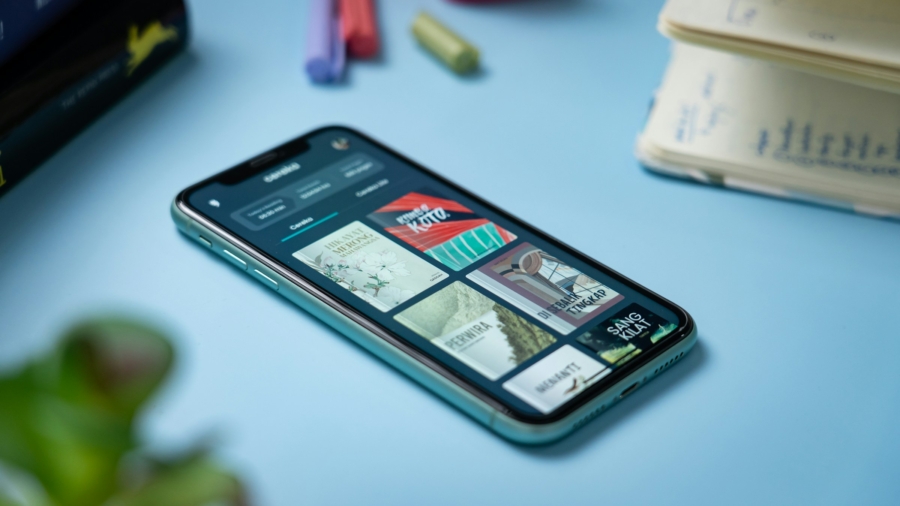
E-Ink Tablet and eBook Reader
Recently I was asked what e-ink tablet I use for all my ebooks. Short answer: I don’t. I prefer to carry one device, and OLED on the smartphone has gotten better to the point where I can read comfortably outside. In fact, I think it has come to the point where e-ink displays now have backlights for more comfortable indoor reading experience, as the competition was never about reading outdoors — this is not a camping gear.
There are, in my opinion, two gaping holes of issues with e-ink devices: one, none of them have desirable display to take up space in pockets or bags, and two, none of them have middle-ground to act as a platform for all ebook store fronts. If I were to carry a device all the time (for me, reading is a hobby that I can always jump back on at any time), I have a smartphone that I forked out good chunk of money for with decent display and battery. I don’t need to worry about extra data plans; I don’t need to worry about charging it via micro USB; I don’t need to worry about water proofing. It just works better. The only advantage I can think of is e-link device tends to have slightly bigger display with longer battery life, but if I really wanted such a device, I would’ve grabbed a proper tablet.
It’s the lack of alternative market options on these devices that really kill any opportunities to be seen as true ebook readers. Kindles will always be “Kindle” unless I can read some other ebooks from other proprietary formats. For example, since Amazon’s presence in South Korea is minuscule, for Korean ebooks, I use local platform. The Korean platform in question has their own apps, much like Google. I also use Google’s, which also does not support Kindle. It seems Amazon has no desire to extend the olive branch when even Kindle itself does not have global presence yet. Same goes for local or indie publishers and platforms, too. Last I checked, none of the devices offered by the platforms or the third party e-ink tablets had agreed on hosting each other contents, unless sold DRM-free. Smartphones, on the other hand, can host any ebook stores. In fact, most people would avoid a store front if it doesn’t offer a smartphone app.
If I were to seriously consider an e-ink device, it needs to win over entry level tablet device. The base model for iPad starts at $349, and it features good enough LCD display for most reading sessions — not to mention it is a solid tablet device for other purposes. Real competition is in the smartphone arena though, as most users would at least own a smartphone. Some of the more renowned models have lower latency e-ink displays, but at the price point it is offered beyond iPad’s and other Android tablets, I wonder why one should buy a glorified e-note device. What I want, what most people want in their pocket electronics nowadays, is a general computing device, not a pocket notebook.