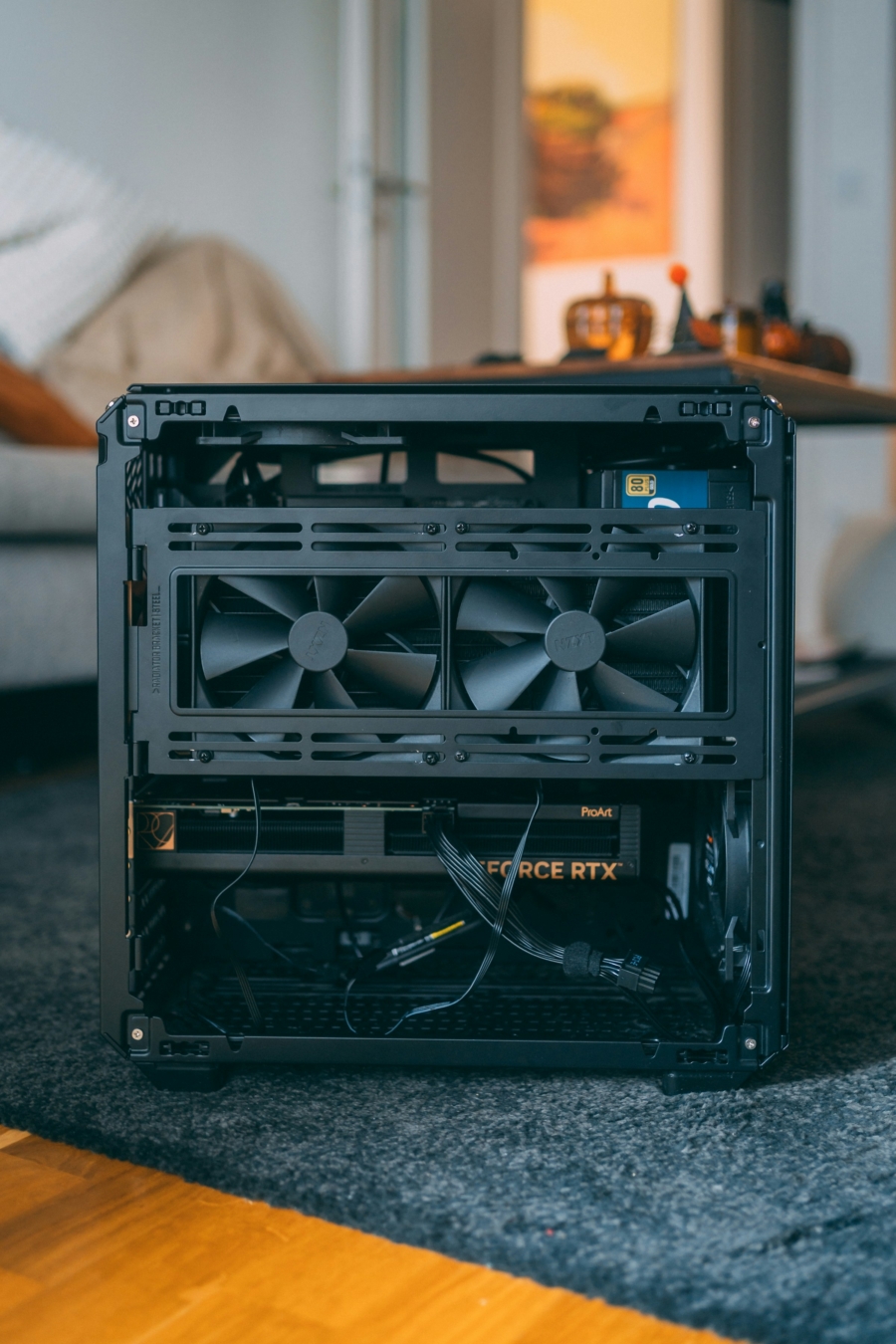
Ever-growing Graphics Card
It is without a doubt the easiest solution to improve the speed of any computer chipset is to simply bundle two in one. I’m not exactly suggesting that is the phenomenon we are seeing, though there could be an argument about Moore’s law and efficiency somewhere. This post is more or less a complaint on the trend of consumer level graphics card. The cards are simply getting larger and too heavy.
Nvidia’s current consumer level flagship graphics card would be RTX 5090, MSRP at $1,999. Graphics cards in high demand since crypto, most prospective consumers would not be able to find one at the MSRP. Next in line are 5080 and 5070 Ti, each priced at $999 and $749. The price tags alone scare away many buyers, but the measurement of the flagship (5090) card is laughably out of this world. While it varies greatly depending on the manufacturer, in its brands, and in the edition within, some of the larger cards measure up to 360 mm. And as for the weight, a lot of them weighs roughly 2 kg (4.4 lb) or more, and it can damage the motherboard in the worst case scenario.
Ultimately, this comes back to bite the consumers with hidden costs to even install a card. For a 4 pounders, it will need a sag support at the very least. And for extraordinary long cards, one will not be simply swapping the card anymore. Perhaps the card won’t fit next to another PCIe cards or the giant CPU cooler. Or perhaps it won’t fit inside the case at all. Some of the extreme builds I’ve read used AIO water-cooling just to avoid the graphics card clearance issue. Water-cooling, especially AIO for graphics card, is its own can of worm, however.
When I see the MSRP on the flagship graphics card, say, one grand for 5080, I believe PC building community has been gaslit not to talk about the hidden costs. Now we need to go back to the drawing board and double check the clearance, — assuming the different manufacturers even provide detailed dimensions on the product page — sag support, and potentially new PSU; those are the three bare minimum at this point.
The only upside in the trend I’ve personally experienced is the willingness and craftsmanship therein the cases designed for enthusiasts. Fractal Design is a good example. The company is credited for its iconic wood paneled PC case, North. But its North line of products is testament to the growing size of graphics cards. On regular North model, GPU clearance is 355 mm, just shy of few millimeters from the longest cards already out in the market. The North XL model, on the other hand, offers a room up to 413 mm. The case manufacturer is actually releasing their popular model in different sizes to accommodate the ever-growing graphics card festa, as if they are new lines of jeans.