Routine Spiel
Routine is, or was, a game in development hell for 13 years. Announced in 2012 with the release window set in 2013, it is no wonder the talks I could find on the game are largely the pure surprise on the mere fact it had not been fully abandoned. No doubt with 13 years of development the game has gone through major changes in directions as well. As a gamer, fortunately, I was not waiting in limbo for 13 years as some of the eager players must have been.
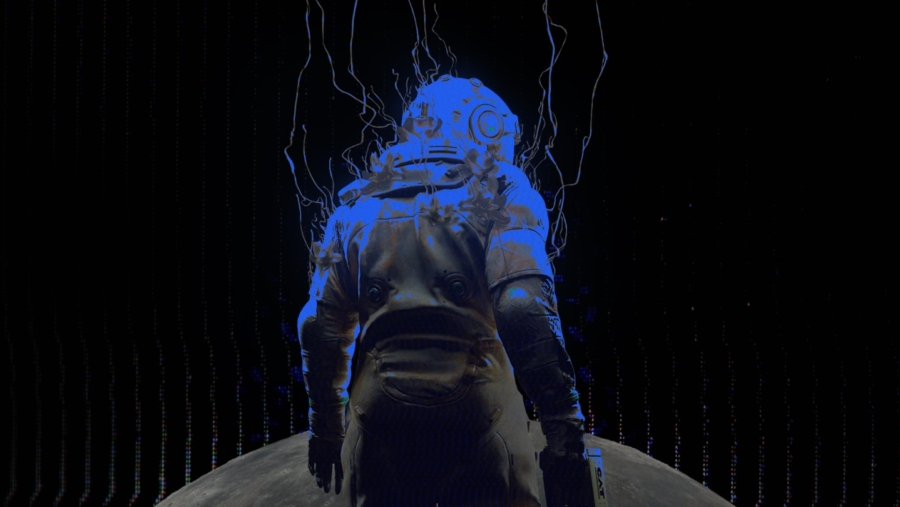
What will strike most players immediately, and so did to me as well, is the retro futuristic atmosphere of the game. The only elements which break its cohesive design language are the enemies — quite contrary to how Alien: Isolation has blended in Working Joes. For the reasons I will explain later, the atmosphere of the game is paramount not only to sell it but to create immersive experience as possible.
As a horror game, the core gameplay of Routine is rather underwhelming. The player either has to unlock some passcodes or find keys while avoiding the enemies. There is only one tool the player has called CAT, and it is up to the player to activate the required function at the given moment. Some functions do use up batteries, which is essentially the ammunition in the game, so it isn’t entirely a walking sim. However, with only two types of enemies, their behaviors make the stealth gameplay more confrontational than covert. In fact, in my playthrough, I often resorted to stunning the enemies with near limitless batteries available. The switching of the functions on the CAT device, while the aesthetic is beautifully crafted, does not necessarily add layers of horror such as waiting for hack to complete while being chased, albeit overly used cliché, to the stealth therein.
While the game possesses some level of narrative unlike, say, Tetris, it is not entirely narrative-driven horror such as Soma. I believe, to some extent, the game’s narrative was broken by choice to introduce different style of retrofuturism and different type of enemy. While the fresh coat of paint was refreshing, the focus deviated too much from the problems the overarching story wanted to resolve — such as why the robots are attacking people and what kickstarted the process.
Lastly, though this is undoubtedly a design choice to elevate immersive experience, some of the UI elements are not the most user friendly. The game does not have a crosshair on, but interacting with the world requires aiming instead of a key prompt. Only when an interactable device shows up it presents a tiny, transparent crosshair. It’s a pain to even press a button on the elevator. Also, some of the doors are simply off. I was surprised to find out the vent doors, which I struggled to “pull” as many vent doors often swing out, are supposed to be pushed in. There is no cue the door must be head butted in. These doors also swing both ways; when the player is leaving the vent, it must be head butted out again. I think using conventional sci-fi sliding doors would have been intuitive thereby more immersive.
Conclusions: Homage to Isolation
As a fan of Alien: Isolation, it was always the Working Joe that sold the classic for me, not the Xenomorph, the perfect organism. The horror natural to retrofuturism, is the future itself, or at least so I find relatable, and dreaded atmosphere is in the core of Routine as a new member of retro futuristic horror club. However, the game begins to disintegrate itself with the addition of homicidal android, which it needed its own variant and reasoning. Though I enjoyed the game as an indie game delving into subgenre of already niche market that is horror, it won’t be for everyone simply looking for sci-fi horror experience.